





Your oven is one of the hardest-working appliances in your kitchen. From Sunday roasts to weeknight dinners, it endures constant spills, grease splatters, and burnt-on food. Over time, this build-up can affect cooking performance, create unpleasant odours, and even pose a fire risk. That’s why oven cleaning is essential for both hygiene and safety. But many people dread it, believing it’s messy and time-consuming. The good news? With the right techniques and products, you can save time, reduce effort, and restore your oven to a sparkling condition.
In this guide, you’ll discover the best way to clean ovens, step-by-step methods, natural cleaning hacks using vinegar and soda, and expert oven cleaning tips that will keep your appliance running efficiently for years.
Why Oven Cleaning Matters
Regular oven cleaning goes beyond aesthetics. It directly impacts:
- Food Taste: Built-up grease releases smoke and odours, altering flavours.
- Energy Efficiency: A clean oven heats up faster and cooks more evenly.
- Safety: Excess grease is a fire hazard.
- Appliance Longevity: Regular cleaning extends the life of your oven.
Neglecting cleaning can make the job harder later, as burnt-on grease becomes more stubborn over time.
How Often Should You Clean Your Oven?
The frequency of cleaning depends on usage:
- Light use (1–2 times a week) – Deep clean every 3–4 months.
- Frequent use (4–5 times a week) – Clean every 1–2 months.
- Heavy use (daily cooking, large meals) – Monthly deep cleaning.
Wipe spills as soon as they happen to prevent hard build-up and reduce the need for intensive scrubbing later.
The Best Way to Clean Ovens: Step-by-Step
1. Gather Your Supplies
- Rubber gloves
- Soft cloths or sponges
- Scraper or non-scratch scrub pad
- White vinegar
- Baking soda
- Spray bottle
- Warm water
2. Empty the Oven
Remove racks, trays, and thermometers. These can be washed separately in warm soapy water or cleaned with vinegar and soda paste.
3. Make a Natural Cleaning Paste
Mix half a cup of baking soda with a few tablespoons of water until it forms a spreadable paste. This is one of the most effective oven cleaning tips and avoids harsh chemicals.
4. Apply the Paste
Spread the paste over the oven’s interior, avoiding heating elements. Leave it to sit for at least 8–12 hours (overnight is best).
5. Wipe and Spray with Vinegar
Wipe off the dried paste with a damp cloth. Spray vinegar inside the oven to neutralise residue and fizz away remaining grease.
6. Clean the Racks
Soak racks in hot water with vinegar and baking soda for two hours, then scrub with a sponge.
7. Polish the Glass Door
Mix vinegar and water in equal parts. Spray onto the door, leave for 15 minutes, then wipe for a streak-free shine.
Cleaning Oven with Vinegar and Soda
One of the most popular natural methods is cleaning oven with vinegar and soda. The combination creates a fizzing reaction that loosens stubborn grime.
- Sprinkle baking soda on greasy spots.
- Spray with vinegar and let it foam for 10–15 minutes.
- Scrub lightly and wipe with a damp cloth.
This method is eco-friendly, safe for families, and avoids the harsh fumes of chemical cleaners.
Commercial Oven Cleaners vs Natural Methods
|
Natural Cleaning (Vinegar & Soda) |
Commercial Oven Cleaners |
|
Safe, eco-friendly, non-toxic |
Powerful, works quickly |
|
Affordable and always available |
Strong fumes require ventilation |
|
Requires longer soaking and scrubbing |
Cuts through heavy grease faster |
|
Best for light to medium dirt |
Best for tough, burnt-on deposits |
For regular upkeep, natural cleaning works perfectly. For heavily soiled ovens, chemical cleaners may be more efficient.
Cleaning Oven Racks: Best Practices
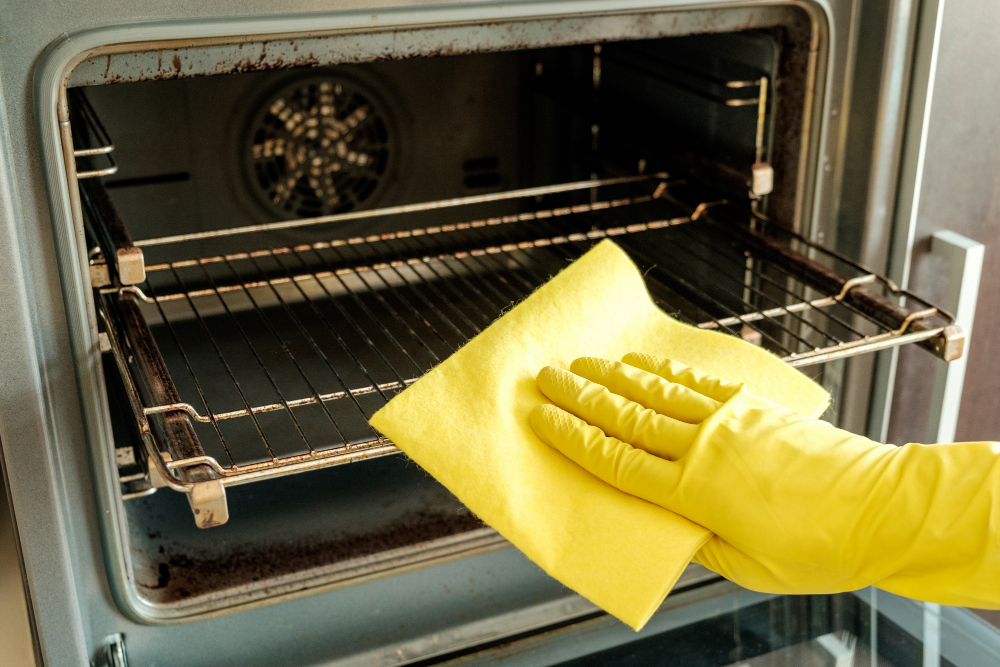
Racks often collect the most grease and burnt food. The best way to clean oven racks is:
- Remove and soak in a bathtub filled with hot water, vinegar, and baking soda.
- Leave for at least two hours.
- Scrub with a brush or sponge and rinse thoroughly.
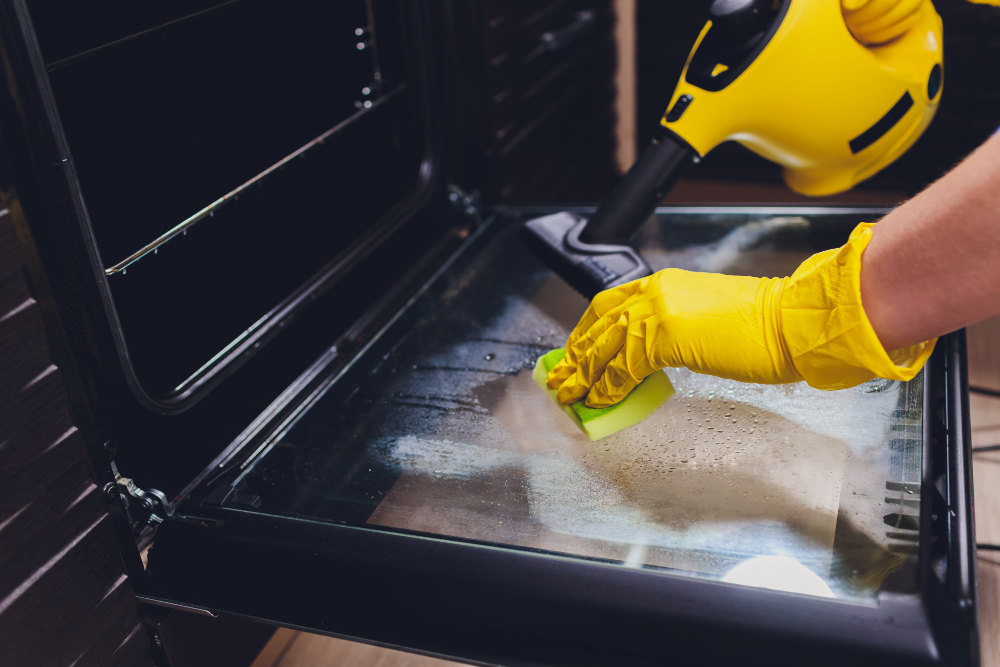
Cleaning Oven Glass Door
The glass door often gets covered in greasy splatters. For a streak-free finish:
- Make a baking soda paste and apply it to the glass.
- Leave for 30 minutes.
- Wipe clean with vinegar and water spray.
- Dry with a microfibre cloth.
Quick Oven Cleaning Tips for Busy Homes
- Line trays with foil to catch drips and prevent spills.
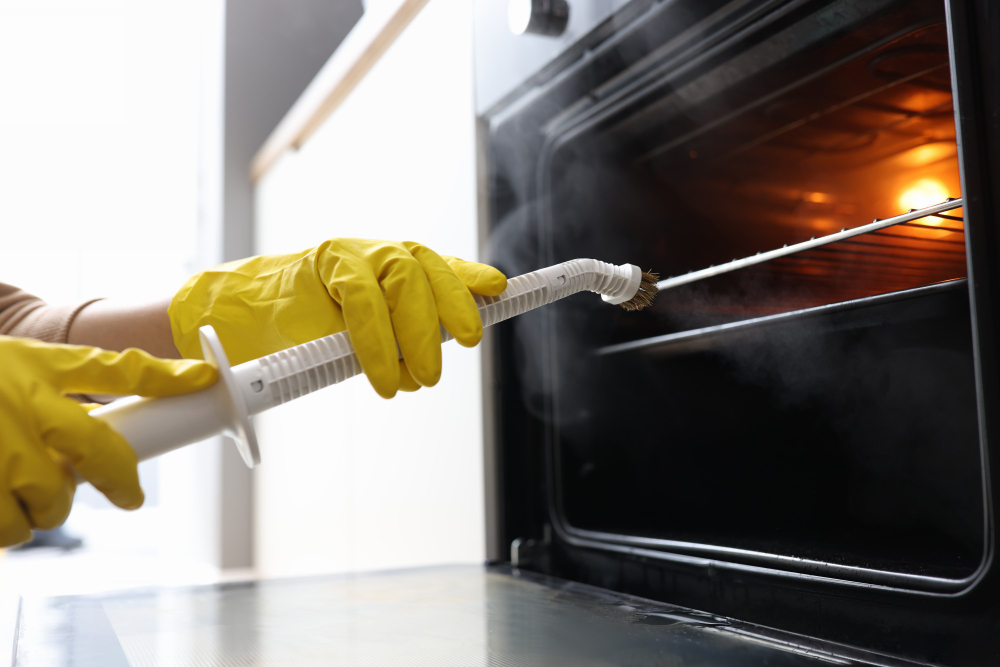
- Place an oven-safe dish of water and vinegar inside and heat for 30 minutes. The steam will loosen the grease for easier wiping.
- Wipe spills immediately after the oven cools.
- Use oven liners to protect the base from burnt-on food.
Deep Cleaning vs Maintenance Cleaning
- Maintenance Cleaning: Quick wipe-downs after use, vinegar spray once a week.
- Deep Cleaning: In-depth scrubbing of racks, trays, and glass every 1–3 months, depending on use.
Keeping a balance between both methods saves time and ensures your oven always looks and smells fresh.
Safety Tips for Oven Cleaning
- Always wear gloves to protect your hands.
- Ensure the oven is switched off and cool before cleaning.
- Ventilate the kitchen if using chemical cleaners.
- Avoid scouring pads that scratch enamel surfaces.
- Never mix bleach with vinegar—it produces dangerous fumes.
FAQs About Oven Cleaning
Q1. What is the best way to clean ovens naturally?
Using baking soda and vinegar is one of the safest and most effective natural cleaning methods.
Q2. How do I clean my oven without chemicals?
Make a paste of baking soda and water, apply it overnight, and spray vinegar before wiping.
Q3. How often should I deep clean my oven?
Every 2–3 months for average use, or monthly for heavy use.
Q4. Can I clean oven racks in the dishwasher?
Yes, but soaking in vinegar and soda is often more effective for stubborn grease.
Q5. How do I remove burnt-on grease from the oven door?
Apply baking soda paste, leave for 30 minutes, then scrub gently and wipe with vinegar.
Q6. What is the fastest way to clean an oven?
Commercial oven cleaners work fastest but require safety precautions.
Q7. Can I use lemon to clean my oven?
Yes, heating lemon juice and water inside the oven creates steam that loosens grime.
Q8. Is vinegar safe for oven cleaning?
Yes, vinegar is safe, eco-friendly, and highly effective at cutting through grease.
Q9. Should I use foil at the bottom of my oven?
Yes, but use oven-safe liners designed for this purpose to prevent damage.
Q10. Why does my oven smell after cleaning?
This happens if residue is left behind. Wipe thoroughly and heat the oven on low for 20 minutes to burn off odours.
Conclusion
Oven cleaning may seem like a dreaded chore, but with the right approach, it becomes much simpler. From natural methods like cleaning ovens with vinegar and soda to quick oven cleaning tips and effective commercial products, there are solutions for every household.
By keeping up with regular maintenance, you’ll avoid the stress of tackling burnt-on grease and save time in the long run.
If you prefer a professional touch, Urbanshine Cleaners offers expert oven cleaning services in London. Our team uses safe, effective methods to restore your oven, leaving it spotless, odour-free, and ready for your next meal.