





Brass is one of those timeless materials that combines beauty and practicality. From antique ornaments and home décor to jewellery, musical instruments, and kitchenware, brass has a rich golden finish that elevates any setting. Although brass looks gorgeous, it doesn’t last forever. Over time, it tarnishes, loses shine, and may even develop green corrosion.
The good news is that brass can be restored. Knowing how to clean brass the right way helps protect its natural glow without causing damage. And the best part? You don’t always need harsh chemicals. With simple, natural methods, you can keep your brassware sparkling for years.
This guide covers everything you need to know, from brass metal cleaning techniques to tips for untarnishing brass safely, and even the best way to clean heavily corroded brass.
Does Brass Tarnish?
Yes — brass tarnishes naturally. Tarnish is a surface-level change that happens when brass (an alloy of copper and zinc) reacts with air, moisture, or skin oils.
- Oxygen causes dullness or black spots.
- Moisture and humidity speed up oxidation, sometimes turning brass green (verdigris).
- Skin contact transfers oils and acids, leaving marks.
- Pollution and chemicals in the air can accelerate tarnishing.
The good news is tarnish doesn’t permanently damage brass. With the right cleaning approach, you can restore its original shine.
Solid Brass vs Brass-Plated: Why It Matters
Before you start cleaning, determine whether your item is solid brass or brass-plated:
- Solid Brass – Heavier, non-magnetic, golden all the way through.
- Brass-Plated – A thin brass layer over another metal, often magnetic.
Why it matters: aggressive cleaning can strip away brass plating. If you’re cleaning brass-plated items, always use the gentlest methods.
Step-by-Step: Best Way to Clean Brass
Here’s a safe and effective routine for cleaning brassware at home:
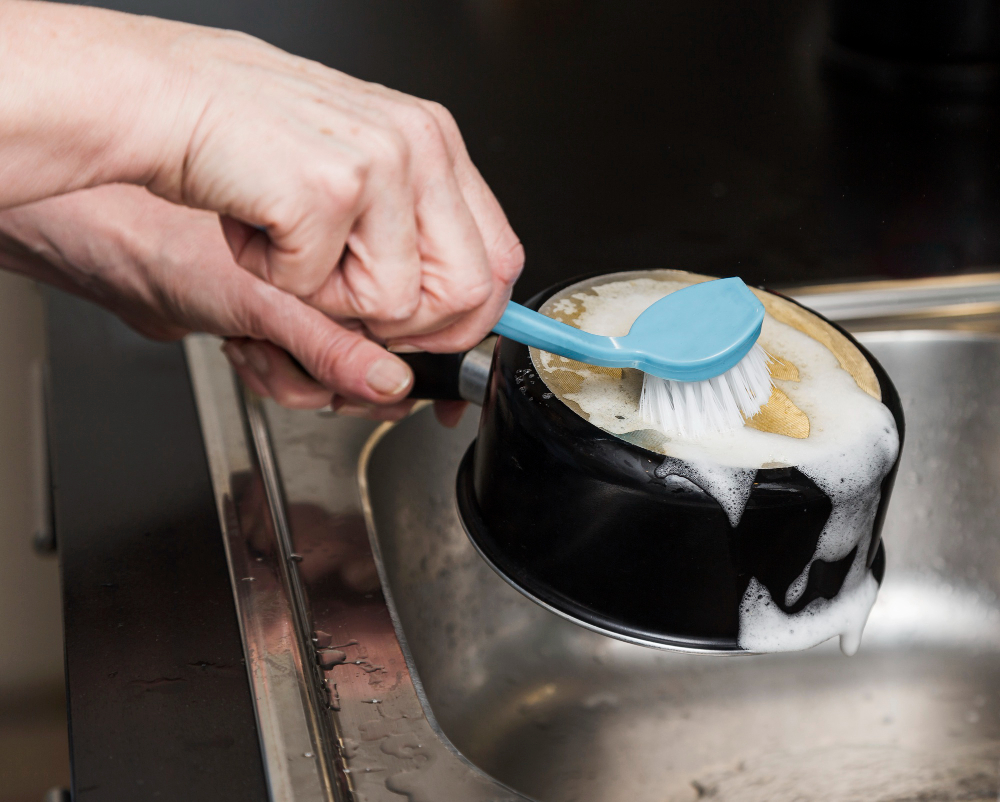
Step 1: Wash with Soap and Water
- Mix mild dish soap with warm water.
- Wash the item to remove dust and dirt.
- Rinse and dry completely.
Step 2: Choose a Natural Cleaning Method
Method A: Vinegar, Salt, and Flour Paste
- Mix equal parts vinegar and flour with a teaspoon of salt.
- Apply paste to the brass item and leave for 30–60 minutes.
- Rinse with warm water, dry, and buff with a soft cloth.
Method B: Lemon and Baking Soda
- Mix lemon juice and baking soda into a paste.
- Apply with a cloth and rub gently.
- Rinse thoroughly, then polish.
Method C: Tomato Ketchup
- Spread ketchup or tomato paste over tarnished areas.
- Leave for 10–15 minutes.
- Wipe away and polish dry.
Step 3: Buff and Protect
After cleaning, buff the brass with a microfibre cloth. Apply a light coat of mineral oil or beeswax to slow down tarnishing.
How to Clean Heavily Corroded Brass
If your brass has deep tarnish or green patches (verdigris), try these stronger methods:
- Vinegar Soak – Submerge the item in a vinegar-and-water solution for 30 minutes, then scrub gently with a soft brush.
- Salted Lemon Scrub – Cut a lemon, dip it in salt, and rub it directly onto the brass. Rinse thoroughly.
- Baking Soda Paste – Apply thickly, leave overnight, then scrub lightly.
Tip for antiques: Avoid aggressive cleaning. Patina (the aged finish) often adds value, so stick to gentle methods.
Cleaning Different Types of Brass
1. Brassware (Handles, Knobs, Décor)
- Use vinegar paste or lemon scrub.
- Always dry thoroughly after cleaning.
2. Brass Jewellery
- Wash with mild soap and water.
- Avoid vinegar or strong acids.
- Store in soft fabric pouches to prevent scratches.
3. Brass Musical Instruments
- Use specialist brass polish designed for instruments.
- Wipe fingerprints after every use to prevent tarnish.
4. Brass Kitchenware
- Clean with lemon juice and salt for food-safe care.
- Avoid leaving acidic foods (tomato, vinegar) in contact with brass.
5. Antique Brass
- Handle gently — don’t strip patina.
- Stick to mild soap and water or professional cleaning.
Natural vs Commercial Brass Cleaners
| Natural Methods | Commercial Cleaners |
| Eco-friendly & safe | Stronger & faster |
| Cheap & homemade | May contain harsh chemicals |
| Great for regular upkeep | Best for tough corrosion |
| Slower results | Works quickly but needs care |
For regular cleaning, natural solutions are the best way to clean brass. For badly corroded pieces, occasional use of commercial polish can help.
Preventing Tarnish: Long-Term Brass Care
To keep brass gleaming for longer:
- Dust weekly with a soft cloth.
- Avoid humidity — store brass in a dry area.
- Apply wax or oil to create a protective barrier.
- Don’t touch unnecessarily — skin oils speed tarnishing.
- Store jewellery separately in cloth pouches.
Mistakes to Avoid When Cleaning Brass
- Using steel wool or abrasive pads — they scratch the surface.
- Leaving brass wet after cleaning.
- Over-polishing brass-plated items (risk of stripping).
- Using bleach or ammonia, which are too harsh.
- Stripping patina from antiques unnecessarily.
FAQs: How to Clean Brass
Q1. How do you clean brass naturally?
Mix lemon juice and baking soda into a paste, apply, rinse, and polish dry.
Q2. Does brass tarnish permanently?
No. Tarnish is surface-level and can be removed with the right methods.
Q3. What is the best way to clean brass metal?
For light tarnish, vinegar paste works well. For corrosion, lemon and salt are effective.
Q4. How do you clean heavily corroded brass?
Soak in vinegar solution for 30 minutes, scrub gently, and rinse.
Q5. Can vinegar damage brass?
No, but don’t soak brass for too long. Short applications are safe.
Q6. How do you clean brass jewellery?
Use mild soap and water, then dry thoroughly. Avoid acids like vinegar.
Q7. Can toothpaste clean brass?
Yes, plain white toothpaste can polish small brass items effectively.
Q8. How often should brass be cleaned?
Every 2–3 months, or whenever tarnish appears.
Q9. Why does brass turn green?
Green patches (verdigris) form when copper in brass reacts with moisture and air.
Q10. Should antique brass be polished?
Not always. Antique brass often has valuable patina, so clean gently without stripping its aged look.
Conclusion
Brass is durable and beautiful, but it does require regular care. Tarnish may be inevitable, but with the right methods — from vinegar and flour paste to lemon and baking soda scrubs — you can restore shine naturally without damaging the metal.
The secret is to clean gently, protect surfaces from humidity, and avoid harsh chemicals. Professional cleaning may be the safest option for delicate antiques or valuable items.
For expert help with brass items and all other home cleaning needs, Urbanshine Cleaners provides reliable, eco-friendly cleaning services across London. Our team uses safe, effective methods to keep your household surfaces and décor looking their very best.