



Gym hygiene is not a preference — it is a condition of operation. A fitness facility where dozens or hundreds of people sweat on shared equipment daily, use communal changing rooms, and share showers creates a hygiene environment that requires a systematic, properly specified cleaning approach. Inadequate gym cleaning leads to bacterial contamination, member illness, and in documented cases, facility closures.
It also costs memberships. Cleanliness consistently ranks in the top three reasons UK gym members cancel. In London, where competition between facilities is intense and switching a gym membership involves a ten-minute online cancellation, a poor cleanliness standard is a retention problem as well as a health one.
This guide covers what professional gym cleaning involves, what hygiene standards apply to London fitness facilities, what a contract should specify, how much it costs, and what to look for in a cleaning company.
Why Gym Cleaning Is a Specialist Service
The cleaning challenges in a gym environment differ substantially from general commercial cleaning:
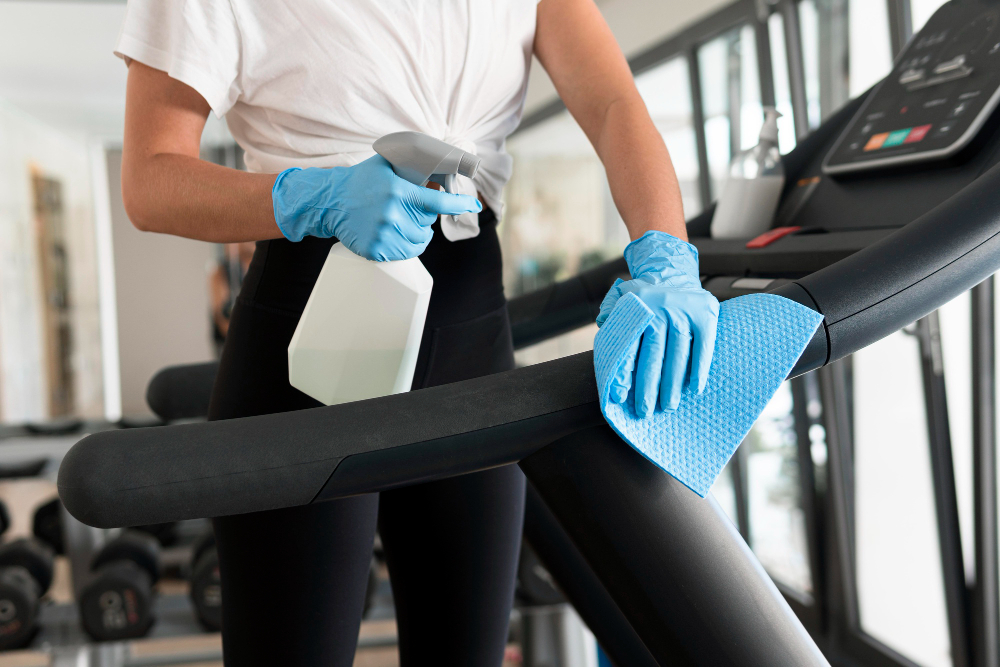
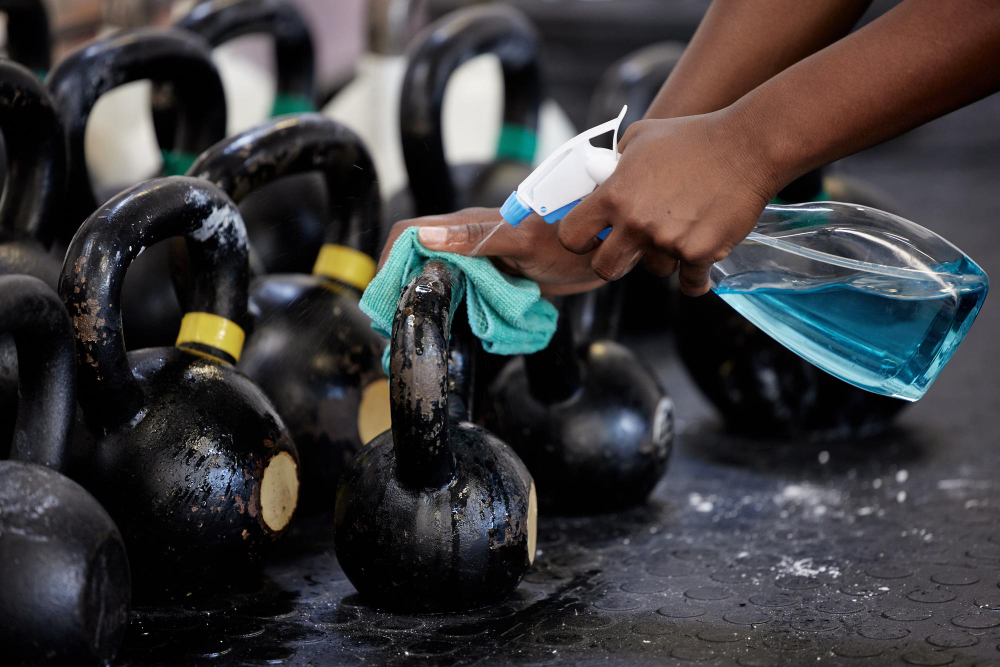
High-contact surface turnover: Barbells, dumbbell handles, cable machine grips, resistance bands, stretching mats, and cardio machine touchscreens are used by multiple people in succession throughout the operating day. Without disinfection during operating hours — not just at end of day — these surfaces carry bacterial loads that standard end-of-day cleaning does not adequately address.
Sweat-specific bacteriology: Sweat creates a specific bacterial environment. Professional gym cleaning uses hospital-grade disinfectants with proven efficacy against Staphylococcus aureus, MRSA, and E. coli. General commercial cleaning products are not rated against these specifically.
Rubber flooring: Gym floors — rubber matting, interlocking tiles, vinyl — retain moisture in joins and under equipment. Bacteria and mould develop in these joins when the floor is not cleaned properly and equipment is never moved. Heavy rubber-mounted machines can go years without the floor beneath them being accessed.
Changing rooms and showers: These are the highest-risk areas in any gym. Athlete’s foot (Tinea pedis) is transmitted through contaminated shower floors. E. coli and Norovirus spread on inadequately cleaned changing room surfaces. These areas require a cleaning specification and product set that exceeds standard commercial cleaning.
What a Professional Gym Cleaning Contract Should Cover
Daily Cleaning (End of Operating Day)

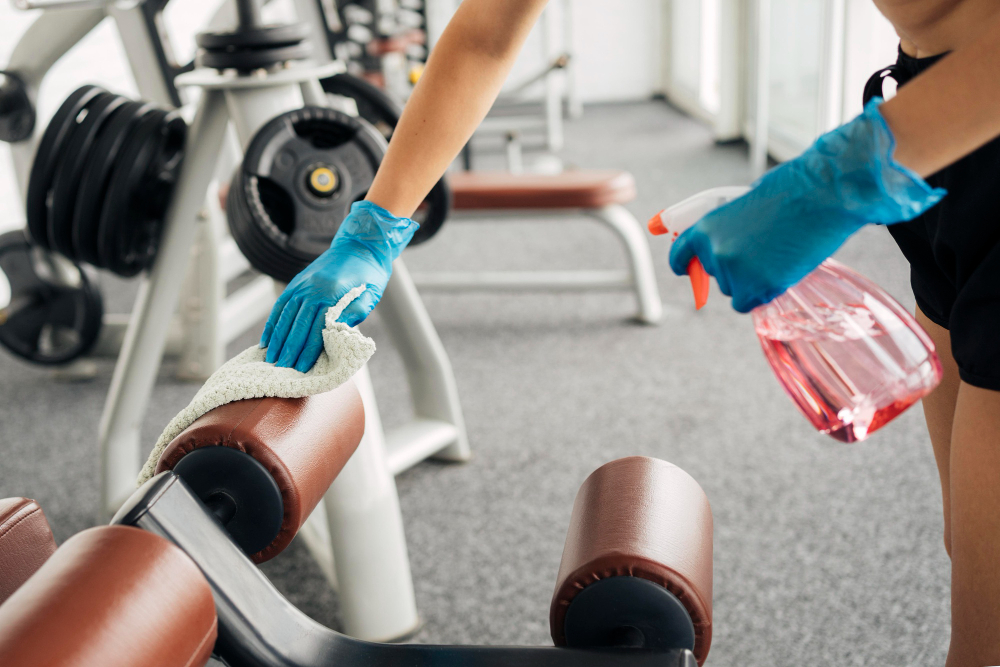
Full disinfection of all contact surfaces on every piece of equipment — not a quick wipe, but a proper dwell-time disinfection with a product rated for the bacteria in question. Full clean of all changing rooms including shower cubicles, tiles, benches, lockers (outside), toilets, and basins. Restocking of consumables (soap, hand sanitiser, paper towels). Reception and common area cleaning. Gym floor swept and mopped.
Daytime Cleaning (For Higher-Footfall Facilities)
For gyms with over 100 member visits per day, end-of-day cleaning alone is not sufficient. A two to four hour daytime presence covering equipment disinfection and changing room checks reduces the bacterial load that accumulates during peak hours. This is typically structured as a mid-day visit covering contact surfaces and changing room spot checks.
Weekly Deep Cleaning
Full floor access clean — equipment moved, floor beneath cleaned, equipment replaced. High-level dusting throughout. Detailed wipe-down of all machine frames, non-contact surfaces, and cable assemblies. Deep clean of changing room floor grouting and drainage channels. Outside of all lockers cleaned.
Monthly or Quarterly Deep Cleaning
Steam cleaning of shower floors and grout. Cleaning inside any accessible equipment panels. Full locker clean throughout changing rooms. Cleaning of ventilation grilles and extractor covers. Detailed clean of gym floor joins and under all equipment.
Gym Cleaning Prices in London (2026)
| Facility Size | Monthly Contract Rate |
|---|---|
| Small studio (up to 200 sqm) | £600 – £1,200 |
| Mid-size gym (200 – 500 sqm) | £1,200 – £2,500 |
| Large commercial gym (500+ sqm) | £2,500 – £6,000+ |
| One-off deep clean — small studio | £300 – £600 |
Contract pricing depends on facility size, cleaning hours per week, whether daytime visits are included, and the specific cleaning specification agreed. UrbanShine Cleaners provides fixed monthly contract quotes based on a site visit and agreed specification.
Minimum Cleaning Specification for London Gyms

Any gym cleaning contract should specify the following as minimums:
- The disinfectant products used, their active ingredient, and their efficacy rating against Staphylococcus aureus and dermatophytes (athlete’s foot fungi)
- Contact surface disinfection frequency — for high-footfall facilities this should include at least one daytime pass
- The frequency at which equipment is moved for floor cleaning — monthly minimum
- Shower grout and floor steam cleaning frequency — quarterly minimum for active changing rooms
- The cleaning procedure for changing room benches and locker doors — both require direct disinfectant contact with appropriate dwell time, not just a wipe
Legal and Regulatory Context
UK health and safety legislation does not prescribe a specific cleaning frequency for commercial gyms, but the Health and Safety at Work Act 1974 and the Management of Health and Safety at Work Regulations 1999 require employers to provide a safe working environment — and facilities open to the public are expected to manage hygiene risks. In practice, the standard applied by fitness industry bodies and local authority environmental health officers is the relevant benchmark.
Facilities that receive complaints about hygiene, that have a documented illness outbreak, or that are inspected by environmental health officers following a complaint need to demonstrate that a proper cleaning specification is in place and being followed. A managed cleaning contract with signed completion records provides this documentation.
Gym Cleanliness and Member Retention: The Business Case
Gym membership cancellations in the UK consistently cite cleanliness in the top three reasons for leaving. This is not an abstract concern — members who rate a facility poorly on cleanliness are significantly more likely to cancel within six months. In London where gym competition is intense and the market is saturated, losing members to cleanliness perception is an avoidable cost.
The cost of a properly specified cleaning contract for a mid-size London gym is £1,200 to £2,500 per month. Retaining five members who would otherwise cancel at an average monthly membership fee of £50 recovers £250 per month — the contract pays for itself at a retention rate that is achievable by maintaining a genuinely high cleanliness standard.
What to Ask a Potential Gym Cleaning Company
- Can you confirm the specific products you use are rated against Staphylococcus aureus and dermatophytes?
- Do you include daytime cleaning visits in your standard gym contracts, or are these priced separately?
- How often is equipment moved for floor cleaning in your standard specification?
- Do you carry signed completion records for each visit that can be used for inspection documentation?
- Can you provide references from current gym or fitness facility clients in London?
Setting Up a Gym Cleaning Schedule
A gym cleaning schedule needs to reflect actual usage patterns rather than a generic frequency. The following framework works for most London commercial gym operations:
Daily (every operating day): Full equipment disinfection, full changing room and shower clean, reception and common area maintenance, consumables restocked, gym floor swept and mopped.
Weekly: Equipment moved for floor cleaning, high-level dusting, detailed machine frame wipe-down, detailed locker and bench clean.
Monthly: Full floor deep clean including joins and drainage, steam clean of shower floors, ventilation grille cleaning, storage area clean.
Quarterly: Full facility deep clean, shower grout steam treatment, detailed cleaning of all locker interiors, inspection and cleaning of any mat storage areas.
Facilities that operate extended hours — 24-hour gyms, for example — need to adapt this framework because end-of-day cleaning may not correspond with a natural low-activity period. For these facilities, a scheduled deep-clean period of two to three hours in the early hours is standard, with a daytime presence covering spot cleaning and restocking.
Gym Cleaning Documentation and Compliance
Maintaining cleaning records is not just good practice — it is a practical requirement for any gym that may be subject to inspection or that wants to demonstrate due diligence in the event of a member illness complaint.
A properly managed gym cleaning contract includes signed completion records for every visit, specifying what was cleaned, when, and by whom. UrbanShine Cleaners provides service records for all commercial cleaning contracts, formatted for retention and available for inspection if required.
Choosing Between an In-House Cleaner and a Managed Contract
Smaller studios sometimes use an in-house employee for cleaning rather than a managed contract. The practical comparison: an in-house cleaner at London minimum wage for 20 hours per week costs approximately £12,500 per year including employer’s National Insurance and holiday pay. A managed cleaning contract covering the same hours from a professional cleaning company costs approximately £14,400 to £24,000 per year depending on scope.
The premium for the managed contract covers: specialist gym hygiene products and equipment, managed staff cover (no gap in cleaning when the individual is sick or on holiday), management oversight and quality checks, and public liability insurance. For most gyms above the smallest micro-studio scale, the managed contract produces better outcomes and better documentation.
Frequently Asked Questions: Gym Cleaning in London
How often should gym equipment be disinfected? For equipment in active daily use: full disinfection at end of day as a minimum. For facilities with over 100 visits per day, a midday disinfection pass of all contact surfaces is recommended in addition to the end-of-day clean.
What is the correct dwell time for gym disinfectants? Dwell time — the period the disinfectant needs to remain wet on the surface to achieve the rated kill — varies by product. Typical hospital-grade disinfectants require 30 seconds to two minutes of wet contact time. A quick spray and wipe without dwell time does not achieve the rated efficacy. UrbanShine Cleaners teams are trained on correct dwell time application.
Should gym equipment be wet when members use it? No. Equipment should be dry before use. Wet surfaces are a slip hazard and uncomfortable. A good cleaning process — spray, dwell, wipe dry — leaves surfaces dry and appropriately clean.
Can UrbanShine Cleaners provide cleaning at a gym that is open 24 hours? Yes. UrbanShine Cleaners can accommodate early morning or late-night cleaning visits for 24-hour facilities. The cleaning window and specific requirements would be agreed at the contract stage.
| Book a gym cleaning site visit — managed gym cleaning contracts across Central London, South London, and East London. |