




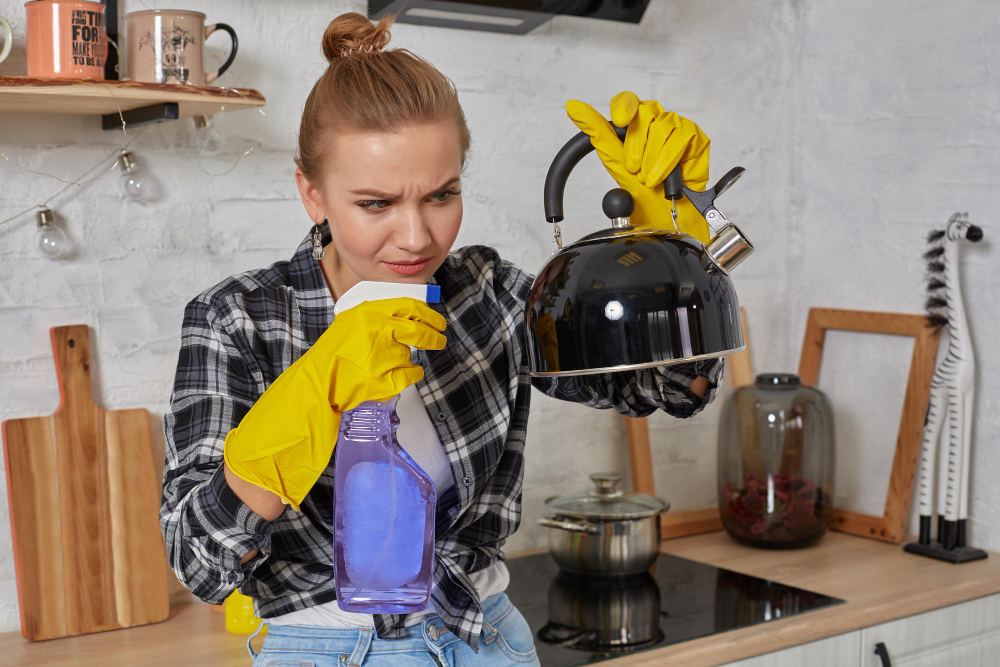
London has some of the hardest tap water in the UK. The water supply collects calcium carbonate as it passes through chalk and limestone before reaching your tap, and that calcium deposits on every surface it touches — inside your kettle, around your taps, on your shower screen, and in your dishwasher. In the kettle, it deposits directly onto the heating element.
Limescale in a kettle does three things: it affects the taste of hot drinks (the chalky mineral taste that people notice but cannot always identify), it makes the heating element less efficient which uses more electricity, and it shortens the working life of the element. In London, where water hardness is classified as very hard, these effects are more pronounced than in most other UK cities — and the descaling interval is shorter.
This guide covers every descaling method with honest assessments of each, what does not actually work despite widespread recommendation, how often to descale in a London hard water area, and how to keep the interval between descales as long as possible.
Understanding London Water Hardness
Water hardness is measured in milligrams per litre of calcium carbonate. The classifications used in the UK are:
| Classification | mg/L CaCO3 | UK Cities |
|---|---|---|
| Soft | 0 – 60 | Glasgow, Inverness, parts of Wales |
| Moderately hard | 60 – 120 | Parts of the North East |
| Hard | 120 – 180 | Birmingham, Leeds |
| Very hard | 180+ | London, south east England |
London tap water typically reads between 200 and 300 mg/L — firmly in the very hard bracket. For comparison, the average in Glasgow is around 50 mg/L. This is why a London kettle develops a visible white coating inside within four to six weeks of use, while the same kettle in Scotland might take three to four months.
The harder the water, the more frequently you need to descale. Accepting this as a given and establishing a regular interval is more effective than treating it as a one-off problem.
Method 1: Citric Acid — The Best Option for Hard Water Areas
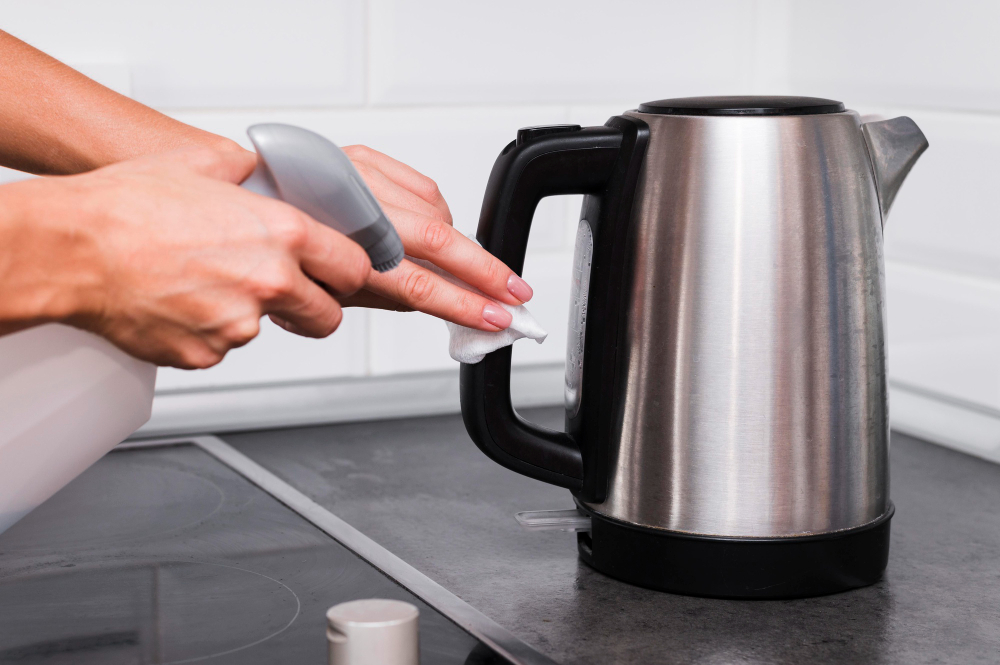
Citric acid is a weak organic acid that dissolves calcium carbonate efficiently and quickly. It is the method recommended by most professional cleaners and appliance manufacturers for hard water areas, for three reasons: it is more effective than white vinegar on heavy scale, it leaves no smell or aftertaste, and it is completely food safe.
What you need: Citric acid powder — available in supermarkets (baking or home brewing aisle), health food shops, or online. Around 50p to £1 per use.
How to use it: Add one to two tablespoons of citric acid powder to a full kettle of cold water. Bring to the boil. Switch off and leave to soak for 20 to 30 minutes. Empty, rinse thoroughly two to three times with fresh water.
How long it takes: Around 40 minutes total including soaking.
Frequency for London: Every four to six weeks for a kettle used daily without a filter jug.
Why it beats vinegar in hard water: On the scale that builds up in London water within four to six weeks, citric acid dissolves it fully in a single treatment. White vinegar often requires multiple treatments or extended soaking on the same scale.
Method 2: White Vinegar — Effective for Light Scale
White distilled vinegar is acidic (acetic acid) and does dissolve calcium carbonate. It works well for light to moderate limescale and is the most commonly used home descaling method.
How to use it: Fill the kettle halfway with equal parts white distilled vinegar and cold water. Bring to the boil. Leave to soak for 30 minutes. Empty and rinse thoroughly — at least three full rinses with fresh water. Boil a full kettle of clean water and discard it before use if any vinegar smell or taste remains.
How long it takes: 50 to 60 minutes including soaking and rinsing.
The limitation: On the heavy scale that builds up in a London kettle after six or more weeks, white vinegar may need two treatments to fully dissolve the deposits. Citric acid typically achieves the same result in one. The smell management also adds time.
Critical note — vinegar type: Use white distilled vinegar only. Malt vinegar, brown vinegar, and spirit vinegar are not suitable for descaling. See: urbanshinecleaners.co.uk/can-you-use-malt-vinegar-for-cleaning-everyday-messes/
Method 3: Commercial Kettle Descaler — Quick and Reliable
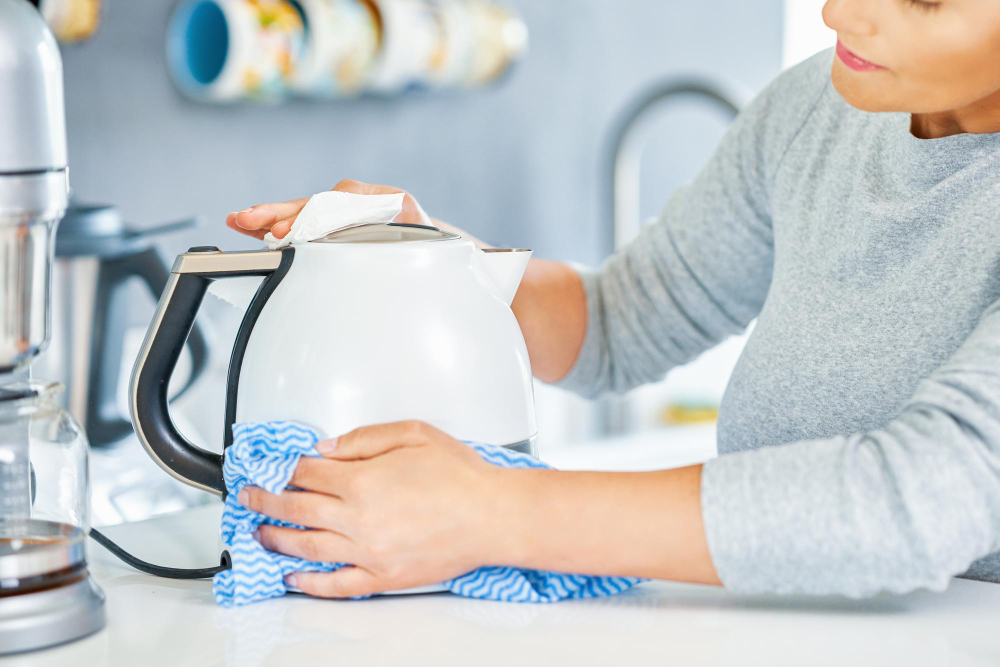
Products like Oust All Purpose Descaler and Durgol are specifically formulated for kettle descaling. They work faster than vinegar — typically 15 to 30 minutes — and are simple to use.
How to use: Follow the manufacturer’s instructions — add the sachet or measured amount to water in the kettle, leave for the specified time, empty and rinse thoroughly.
Cost: £1 to £3 per use compared with pennies for citric acid.
Best for: Heavy build-up where convenience and speed matter more than cost, or for a first descale on a kettle that has not been treated in a long time.
Method 4: Bicarbonate of Soda — Does Not Work for Descaling
Bicarbonate of soda appears in cleaning guides and YouTube videos as a descaling option. It is not. Bicarbonate of soda is a mild alkali — sodium bicarbonate. Limescale is calcium carbonate, a compound that dissolves in acid. Alkalis do not dissolve calcium carbonate.
Bicarbonate of soda is genuinely useful for deodorising, for general cleaning, and for certain stain removal applications. For descaling a kettle, it has no effect. Do not waste time on it for this purpose.
What About Lemon Juice?
Lemon juice contains citric acid and does work as a mild descaler. It is less concentrated than citric acid powder and more expensive, but it is an effective option if you have nothing else to hand. Squeeze the juice of two to three lemons into a full kettle, boil, leave 20 minutes, rinse.
How Often to Descale in London
| Usage Pattern | Recommended Interval |
|---|---|
| Daily use, no water filter | Every 4 to 6 weeks |
| Daily use, with filter jug | Every 8 to 12 weeks |
| Several times a week, no filter | Every 6 to 8 weeks |
| Occasional use, no filter | Every 2 to 3 months or when build-up is visible |
If you can already see a white coating on the element or inside the kettle walls, descaling is overdue. Heavy scale that has been building for several months may need two consecutive treatments with citric acid — descale, rinse, check, descale again if needed.
Protecting the Element: What Overscaling Actually Does
A heating element coated in limescale is insulated from the water around it. This means it has to work harder to heat the same volume of water — it takes longer, uses more electricity, and runs at a higher temperature than it is designed for. Over time, this thermal stress shortens the element’s working life.
For a kettle used several times a day in a London hard water area, descaling every four to six weeks is not excessive — it is the maintenance interval that keeps the appliance working properly for its full lifespan.
How to Slow Limescale Build-Up
- Use a filter jug for drinking water — this removes calcium and magnesium ions before they enter the kettle, typically reducing scale formation by 60 to 80 per cent and pushing the descaling interval to 8 to 12 weeks
- Empty the kettle after each use rather than leaving water to sit in it — water sitting in a kettle between uses deposits calcium as it cools
- Only boil the amount of water you need — less water means less total calcium in the kettle at any given time
- Dry the inside of the kettle if you are leaving it unused for a period — unlikely to be practical in daily use, but relevant for holiday periods
Limescale in the Rest of Your Home
The same calcium-heavy water that affects your kettle affects every appliance and fixture it contacts: taps, shower screens, bathroom tiles, the dishwasher, the washing machine, and the coffee machine if you have one. A systematic approach to limescale management across the whole property — rather than treating each fixture as an isolated problem — produces better results.
For limescale around bathroom fixtures and inside the toilet bowl.
For a professional clean that addresses limescale throughout a London property — taps, shower screens, bathroom tiles, and kitchen surfaces — in a single visit, UrbanShine Cleaners’ deep cleaning service covers all of it.
Limescale and Appliance Longevity
The impact of limescale on appliance lifespan is not a theoretical concern. Washing machines and dishwashers with heavily scaled internal components — heating elements, pump seals, spray arm nozzles — work harder, use more energy, and fail earlier than appliances in soft water areas or those with regular descaling treatment. The UK appliance repair industry consistently attributes a significant proportion of early appliance failures in London and the south east to limescale damage.
For a kettle specifically, the heating element is the single most vulnerable component. A scale-coated element runs at a higher effective temperature than it is designed for and thermal cycles between hot and cold more aggressively. Regular descaling every four to six weeks is maintenance, not just aesthetics.
Descaling Other Kitchen Appliances
Coffee machines: Citric acid solution works for most pod and filter coffee machines. Use a weaker concentration than for kettles — one teaspoon per 500ml — and follow the machine’s descaling cycle if it has one.
Steam irons: White vinegar solution or a commercial iron descaler. Fill one third with solution, heat to steam, allow to steam through, rinse with clean water and steam again. Check the manufacturer’s guidance as some irons specify certain descaling products.
Dishwashers: Run an empty cycle on the hottest setting with a cup of white vinegar in a bowl on the bottom rack, or use a dedicated dishwasher cleaner. Monthly in a London hard water area.
Washing machines: Run an empty 90-degree cycle with a cup of white vinegar or a commercial washing machine cleaner monthly. This also addresses drum odour as well as limescale.
Water Softeners: Are They Worth It in London?
A whole-house water softener replaces calcium and magnesium ions in the water supply with sodium ions, producing soft water throughout the property. This eliminates limescale formation on all appliances, taps, shower screens, and boiler components. Installation costs in London typically run from £600 to £1,500 depending on property size and the unit chosen.
For homeowners in London planning to stay in a property for five or more years, a water softener often pays back through reduced appliance maintenance, longer appliance lifespan, and lower cleaning costs. For renters, a whole-house softener is not usually an option — but a filter jug for the kitchen is the practical alternative.
Frequently Asked Questions: Descaling in Hard Water Areas
Can I use citric acid to descale a stainless steel kettle? Yes. Citric acid is safe on stainless steel, plastic, and glass — the three materials used in most UK kettles. It does not damage the element or any internal component.
How do I know if my kettle is fully descaled? The element should be clearly visible without a white or grey coating. The inside walls should be clean metal or plastic without any chalky residue. Boiled water should taste clean without any mineral flavour.
Is limescale in a kettle harmful to health? Limescale is calcium carbonate — a mineral that is also found naturally in hard water. Drinking water with limescale is not considered harmful by the UK Food Standards Agency. The issue is appliance performance and taste rather than health.
Can I use cola to descale a kettle? Cola contains phosphoric acid and does have mild descaling properties. It is not recommended for kettles as it leaves sugar residue that requires thorough rinsing and can leave odour. Citric acid or white vinegar are more effective and cleaner options.
| Book a professional deep clean covering limescale throughout your London property |