





Most people know they need a deep clean at some point. Fewer people know exactly what that means in practice. The phrase gets used to describe everything from a thorough Saturday clean to a full professional service, and those two things are not the same. This article explains what deep cleaning actually includes, room by room, how it differs from a regular clean, and the situations where hiring a professional service makes more sense than doing it yourself.
What Is Deep Cleaning?
The deep cleaning meaning, in simple terms, is a thorough clean that goes significantly further than a standard weekly or fortnightly routine. Where a regular clean maintains the surface appearance of a home, a deep clean addresses the areas that build up over months: behind appliances, inside cupboards, grout lines, limescale on taps and fixtures, inside the oven, and under furniture that rarely gets moved.
Deep cleaning is not the same as tidying, and it is not the same as a standard domestic clean. It typically takes two to four times longer than a regular visit to the same property, uses specialist products for limescale, grease, and mould, and covers tasks that a regular cleaner would not normally be expected to do in a one or two-hour visit.
The term is also used in two different contexts: a one off deep clean for properties that have not been thoroughly cleaned in some time, and a periodic deep clean scheduled every few months alongside a regular cleaning routine to maintain a higher standard. Both are valid uses of the service. They just serve different purposes.
Deep Clean vs Regular Clean: The Key Difference
Understanding the difference between a deep clean and a regular clean makes it easier to decide what your home actually needs. Many households who maintain a regular cleaning service find that booking a deep clean once or twice a year keeps the property in genuinely good condition year-round.
A regular cleaning service covers the tasks you do to maintain a clean home week to week: vacuuming floors and carpets, wiping surfaces and worktops, cleaning the bathroom, mopping hard floors, and emptying bins. It keeps a home looking clean and prevents surface build-up from getting out of hand.
A deep clean covers all of that and then goes further. It includes the inside of appliances, the grout between tiles, limescale on taps and showerheads, behind and underneath furniture, the inside of cupboards and drawers, skirting boards, light fittings, and all the areas that accumulate genuine dirt over months rather than days.
The honest way to think about it: a regular clean maintains your home’s cleanliness. A deep clean restores it.
What Does Deep Cleaning Include: Room by Room
Kitchen
The kitchen typically takes the longest in any deep clean because it combines grease, limescale, food residue, and dust in a single room.
Oven and Appliances
The oven interior, racks, and door glass are cleaned fully, not just wiped. This means soaking racks, removing baked-on carbon from the interior walls and elements, and cleaning the door seal. The hob, including around burners or induction zones, is degreased properly. The microwave is cleaned inside and out including the ceiling, which collects splattered grease that is usually missed. The extractor fan filter is either soaked and cleaned or replaced if it is a carbon type.
Fridge and Freezer
Every shelf, drawer, and compartment is removed and washed. The door seals are cleaned in the folds, which is where mould tends to start first and is almost always missed in a regular clean. The outside of the fridge including the top, sides, and underneath if accessible is wiped down.
Cupboards and Surfaces
All cupboard doors are cleaned inside and out. The inside of base units is wiped down. Worktops are degreased properly rather than just wiped over. The splashback tiles and grout are scrubbed. The area behind the bin, behind the toaster, and any other small appliances on the worktop are cleaned.
Sink and Drainage
The sink is descaled and cleaned including the overflow and drain area. Hard water deposits around taps are removed. The area behind and underneath the sink is cleaned where accessible.
Kitchen Floor
The kitchen floor is mopped including underneath freestanding appliances that have been pulled out.
Bathroom
Tiles, Grout, and Shower Enclosure
Grout between tiles is scrubbed rather than wiped. A deep clean addresses discolouration and limescale in grout rather than simply removing surface dirt. The shower enclosure including screen, tray, and door runners is descaled and cleaned. Limescale on shower fittings is removed properly rather than masked.
Toilet
The toilet is cleaned including under the rim, where limescale and bacteria accumulate and where standard cleaning rarely reaches. The outside of the toilet including the base, behind the cistern, and the underside of the seat is cleaned.
Taps, Fixtures, and Limescale
All taps are descaled. Limescale is removed from the bath, shower tray, and around fixtures. Chrome fittings are polished. Hard water marks on mirrors and glass are removed. For a detailed step-by-step breakdown of how this is approached in practice, the guide on how to deep clean a bathroom covers the process from start to finish.
Extractor Fan
The bathroom extractor fan cover is cleaned or removed and soaked. Dust and moisture build-up on the fan itself is removed.
Bedrooms
Bedrooms in a deep clean go beyond vacuuming and surface wiping. Furniture is moved to vacuum underneath and behind it. Mattresses are vacuumed using an upholstery attachment, treated with bicarbonate of soda, and left before vacuuming again. Skirting boards are wiped along their full length. Wardrobes are emptied, the interior floor is vacuumed, and shelves are wiped down. Light fittings and any ceiling cobwebs are removed. Window sills and frames are cleaned including the tracks if sash-style.
Living Room and Other Rooms
In the living room and any other rooms, a deep clean includes dusting and cleaning from ceiling to floor in order: coving and ceiling corners, light fittings and lampshades, the tops of door frames and window frames, shelves and their contents, radiators including the fins, skirting boards, and all floor surfaces. Sofas and upholstered furniture are vacuumed including underneath cushions. Hard-to-reach areas behind and underneath furniture are vacuumed after the furniture is moved.
Curtain rails and blinds are dusted or wiped. Window sills are cleaned including any marks from condensation. All glass surfaces including mirrors are polished.
Hallways and Stairs
Skirting boards along stairs and hallways are wiped down fully. Banister rails and spindles are cleaned on all sides. Stair carpets or hard stairs are vacuumed with a crevice tool along every edge. The front door from the inside including the frame and letterbox is wiped down. Light switches and door handles throughout the property are cleaned and disinfected.
When Does a Home Need a Deep Clean?
A deep clean makes sense at specific points rather than as a replacement for regular cleaning. The most common situations where a professional deep cleaning service is the right approach are:
Moving in or out of a property. End of tenancy cleaning is a specific type of deep clean carried out to landlord or letting agent standards. It covers the full property including oven, bathrooms, kitchen appliances, and carpets to a level that protects or recovers a deposit.
After a long period without regular cleaning. Properties that have not been cleaned thoroughly in several months benefit from a deep clean to restore them to a maintained standard before a regular cleaning schedule begins.
Seasonal reset. Many households schedule a deep clean annually alongside their regular cleaning routine. This is similar in scope to a thorough spring clean but carried out by a professional to a higher standard.
Post-renovation or after builders. Construction work generates dust and residue that penetrates into surfaces, grout, and ventilation. A professional deep clean after any building work removes this properly.
If you are trying to decide how often your home needs a deep clean rather than just a regular visit, the guide on how often to book a home deep cleaning service covers the factors that affect this. Property size, number of occupants, pets, and lifestyle all make a difference.
How Long Does a Deep Clean Take?
The time a deep clean takes depends on the size of the property and how long it has been since the last thorough clean. As a rough guide:
A one-bedroom flat that is reasonably maintained takes between two and four hours. A two-bedroom property typically takes three to five hours. A three-bedroom house takes four to seven hours. Larger properties or those that have not been deep cleaned recently take longer.
These are professional service times with a team. A DIY deep clean of the same property will typically take significantly longer because you are working alone without commercial products and equipment.
Deep Cleaning Services in London: What to Expect
A professional deep cleaning service differs from a regular domestic clean in a few important ways beyond just the task list.
Products. Professional deep cleaning uses commercial-grade degreasers, descalers, and disinfectants that remove limescale, grease, and build-up more effectively than domestic products. Oven cleaning products used by professionals are considerably stronger than anything available in supermarkets.
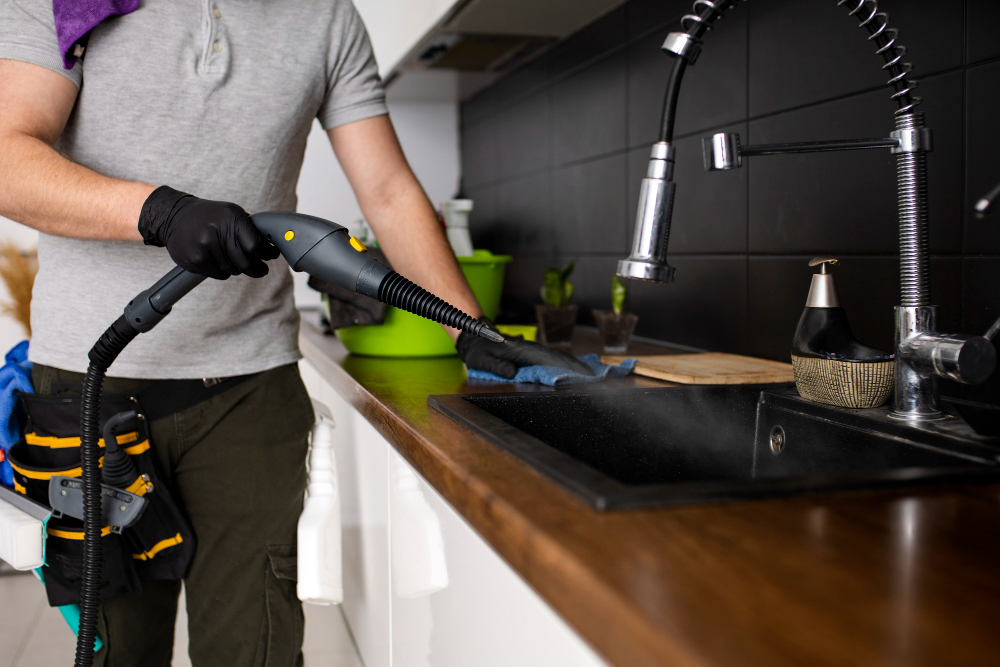
Equipment. Professional services use steam cleaners, grout brushes, specialist vacuum attachments, and other equipment that most households do not own.
Team size. A two or three-person professional team can complete a full deep cleaning service on a two-bedroom property in three to four hours. The same work done by one person takes significantly longer.
Consistency. A professional deep cleaning service works to a checklist that covers every area without omission. DIY deep cleans tend to run out of time or energy and leave areas incomplete.
For a full breakdown of what is covered and how it works in practice, the guide on Urbanshine Cleaners’ professional house deep cleaning service explains the process. For London-specific pricing, the guide on deep cleaning services in London prices for 2026 has current rates by property size.
Frequently Asked Questions
What Is the Difference Between Deep Cleaning and Regular Cleaning?
A regular cleaning service covers maintenance tasks: vacuuming, surface wiping, bathroom cleaning, and mopping. It keeps a clean home clean. A deep clean covers everything a regular clean does plus inside appliances, grout, limescale on fixtures, behind furniture, inside cupboards, and all the areas that are skipped in a routine visit. If a regular clean maintains your home, a deep clean restores it.
What Does Deep Cleaning Include That Regular Cleaning Does Not?
The main additions in a deep clean over a regular visit are: inside the oven and appliances, grout scrubbing and limescale removal, cleaning behind and underneath all furniture, inside cupboards and drawers, skirting boards along their full length, light fittings and ceiling cobwebs, mattress vacuuming and treatment, and all door handles and light switches. These areas are not part of a standard regular cleaning visit.
How Often Should You Get a Deep Clean?
For most households on a regular cleaning routine, a deep clean once or twice a year is sufficient. Properties that have pets, young children, or high foot traffic may benefit from a deep clean every three to four months. Properties returning to a maintained standard after a period without regular cleaning typically need a one off deep clean first, then a regular schedule.
Is Deep Cleaning Worth It?
For most households, yes. The areas that a deep clean covers accumulate genuine dirt and bacteria over months: oven interiors, limescale on fixtures, grout, and behind furniture. Removing this properly is not just cosmetic. Limescale builds on heating elements and reduces their efficiency. Mould in grout and seals spreads if left untreated. Dust in radiator fins and extractor fans affects air quality. A thorough deep cleaning service addresses all of these.
What Is Included in a One Off Deep Clean?
A one off deep clean covers the full property to the same standard as a periodic deep clean service. The difference is simply that it is a single visit rather than a recurring arrangement. It is the most common entry point for households starting a relationship with a professional cleaning service. The deep clean resets the property to a high standard, and a regular cleaning schedule maintains it from there.
One deep clean can make your home feel completely different. Book a professional service with Urbanshine Cleaners and see the difference it makes in the areas you stopped noticing.